
Sustainability (499)
Children categories

Sustainable Development Goals (914)
The Sustainable Development Goals are a universal call to action to end poverty, protect the planet and improve the lives and prospects of everyone, everywhere. The seventeen Sustaiable Development Goals (SDG) were adopted by all UN Member States in 2015, as part of the 2030 Agenda for Sustainable Development which set out a 15-year plan to achieve the Goals.
Bearing witness: Peace Pilgrimage, Names and Remembrance ceremony

80th Anniversary events organized by the Oak Ridge Environmental Peace Alliance
Peace pilgrimage from the Great Smoky Mountains
Peace Walk: Bearing Witness to Hiroshima, August 4–9, 2025
Names and remembrance ceremony
Wednesday, August 6 | 6:00–9:00 a.m.
Location: Across from the Y-12 Security Complex main entrance way in Oak Rige
Join us to honor the victims of Hiroshima with a morning of names and remembrance, bell ringing and a visual tribute of paper cranes; please be sure to bring a chair.
Photo Lecture & Artist Panel
Wednesday, August 6 | 6:30 p.m.
Addison’s Bookstore, 126 S. Gay Street, Knoxville
An evening with Yvonne Dalschen, Black Atticus and guest artists reflecting on the legacy of Hiroshima through art, storytelling and music.
Visit the OREPA website for details and more events.
Bearing witness: Hiroshima, Nagasaki and the end of nuclear weapons

Join us for the first 80th Anniversary event organized by the Oak Ridge Environmental Peace Alliance
First Friday at the Birdhouse — August 1, 5:30-7:30 p.m.
Birdhouse Neighborhood Center, 800 N 4th Ave, Knoxville, TN 37917
This casual OREPA gathering for a special First Friday sneak peek of Yvonne Dalschen’s photo exhibit will include light refreshments and an opportunity to engage with powerful images exploring themes of peace and resistance. All are welcome!
Help tally bumblebees for a regional atlas at Harris Farm

ROCKFORD — Join Foothills Land Conservancy staff the morning of Friday, July 25, 2025, at the Harris Farm as we work on our 2nd survey for the SE Atlas Bumble Bee Survey efforts this summer.
This free event (with a suggested donation $10) is a great opportunity to explore the Harris Farm, visit our native pollinator meadows, and assist our team for a great cause!
Be sure to save-the-date for our August survey, which will be held the morning of Friday, Aug. 22, 2025, at the Harris Farm.
What is the Bumble Bee Atlas?
The Atlas is a community (aka citizen or participatory) science project aimed at gathering the data needed to track and conserving bumble bees. The current data suggests that many species of bumble bees face an uncertain future, and there is a lack of data needed to implement effective conservation measures, especially at the regional scale. “Community science” means anyone is welcome to participate and help contribute to a better understanding of bumble bee needs.
John Skinner will be assisting the FLC staff with this survey. John is a retired Professor and Extension Apiculture Specialist in the Department of Entomology and Plant Pathology at the University of Tennessee. John’s knowledge and instruction is super helpful and we are excited that he can join us this year too.
A happy ending and new beginning after a sad story at Appalachian Bear Rescue
Written by Hellbender Press Rosemary Bear (class of 2022) cools off in a cub tub (all to herself this time, thank you) on a hot July day at Appalachian Bear Rescue in Townsend. The center entered a new agreement with licensing authority Tennessee Wildlife Resources Agency that calls for improved sanitation, regular pen rotation and burnovers and other management techniques. TWRA euthanized 13 bears in December 2024 following fatal and persistent strains of pneumonia. The center has been closed since; ABR director Greg Grieco said on July 22 the facility expects to complete renovations and be ready for the next crop of orphaned and injured bears by spring 2026. Appalachian Bear Rescue
TWRA and bear rescue center reach agreement to resume rehab services at Townsend facility next year
This is a joint release from the Tennessee Wildlife Resources Agency and Appalachian Bear Rescue.
NASHVILLE — The Tennessee Wildlife Resources Agency (TWRA) and Appalachian Bear Rescue (ABR) have reached a new partnership agreement for black bear rehabilitation in Tennessee.
During the course of 2023 and 2024, the presence of pneumonia raised initial concerns about the health of bears being housed at ABR. After a difficult decision in December 2024 to euthanize 13 bears, the agency temporarily paused the placement of bears at the facility.
In the months that followed, TWRA staff sought input from bear managers, wildlife veterinarians and disease pathologists in other states on best management practices and pen sanitation measures such as discing, burns and leaving pens empty on an annual rotational schedule. ABR staff immediately started working to implement extensive modifications and upgrades to the facility to align with the recommendations of these professionals.
TWRA leadership also began working with ABR to draft an official operating agreement to strengthen the relationship between the two entities, set clear expectations for best management practices for bear rehabilitation and provide transparency to members of the public invested in wildlife conservation.
Dust to dust: Bull Run stack hits the deck as TVA kicks coal to curb
Written by Ben Pounds The regionally famous Bull Run smokestack was demolished this summer by the Tennessee Valley Authority as the federal utility phases out the use of coal to generate electricity. Climate activists are alarmed by TVA’s plans to replace coal with natural gas, itself a powerful greenhouse gas pollutant. Tennessee Valley Authority
What’s next for mammoth utility after demolition of Claxton, Tenn. landmark stack?
CLAXTON — In a matter of seconds, the old smokestack fell like a giant tree, heaving clouds of dust as it hit the ground. Workers set off the implosion with a loud boom at the base of the towering smokestack on June 28, at Bull Run Fossil Plant just outside of Oak Ridge. Minutes earlier, the shorter and more modern ‘scrubber’ bit the dust in similar fashion.
UPDATED 6/25: More details emerge after Trump cuts bleed UT Agriculture Institute of $31 million
Written by Cassandra Stephenson and Ben Pounds The University of Tennessee burial mound on the agriculture campus in Knoxville dates to 644. The mound was constructed by native tribes of the Woodland Period and is on the National Register of Historic Places. Wikipedia Commons
DOGE bites off $37.7 million in science and other funding from University of Tennessee system; cuts include climate initiatives and pesticide safety education
This story was originally published by Tennessee Lookout. Highlighting added by Hellbender Press. The original story continues below. This story will be updated.
KNOXVILLE — The Trump administration has paused or defunded many programs at American universities, including some notable cuts in agriculture grants at the University of Tennessee.
Systemwide, a total of 42 grants to UT valued at $37.65 million ended, Melissa Tindell, UT’s assistant vice president of communication said, consistent with statistics she’s given other outlets. Eight of these terminated grants were going to the UT Institute of Agriculture and totaled $31.19 million.
Also, across the system, she said, the college had received a total of nine partial stop work orders, meaning students and staff cannot complete portions of those projects, though the total award amount hasn’t been impacted at this time.
“The most immediate impact has been the need to transition students and staff supported by these affected projects to alternative funding sources,” Tindell told Hellbender Press, reiterating a statement for Tennessee Lookout. “Essential work such as reporting, compliance and other research operations continue with adjusted support.”
Among the various research programs with terminated funding are several environmental projects.
- doge cuts
- trump cuts
- trump science cuts
- trump cuts to ut
- University of Tennessee Agricultural Institute
- cattle and climate change
- ut extension outreach
- ut ag campus cuts
- ut indian mound
- tennessee pesticide safety education program
- excet
- grasslands initiative utk
- climate smart grasslands
- doge science cuts
- the grasslands partnership
- climatesmart commodity
- climate smart grassland
- soil health
- biodiversity
Despite blowback and historical revisionism, Juneteenth is cause for grand celebration
Written by Angela Dennis A ribbon commemorating Juneteenth drapes a historic marker in one of Knoxville’s multiple cemeteries where enslaved people are buried. Angela Dennis
East Tennesseans find ways to celebrate Juneteenth amid crackdowns on DEI
This story was originally published by Tennessee Lookout.
KNOXVILLE — As cities across Tennessee prepared for Juneteenth celebrations with banners unfurling, vendors setting up and leaders finalizing programs honoring Black liberation, a deeper question lingers: What does it mean to celebrate freedom in a state restricting how that freedom’s history is taught?
In Tennessee, state lawmakers have gutted DEI programs, banned books by Black authors and restricted how teachers can talk about race and history in the classroom.
This year’s celebrations have also come with cutbacks. Across the country, Juneteenth events have been scaled back due to shrinking DEI funding, canceled federal grants and retreat from corporate support for racial justice initiatives.
For many Black educators, organizers and students, the policies feel like a modern day echo of the delayed freedom Juneteenth was created to mark. It represents a continued struggle for true freedom and liberation.
Sweet nectar of spring flows at annual UT pollinator festival
Written by Lauren Tolley Pollinators play a vital role in maintaining our ecosystems, economies and agriculture. Here’s a bee in flight at the UT Gardens in Knoxville. R. Lazarian/UTIA
Get your buzz on in Knoxville or two other locations in the state during Pollinator Week June 16-25
Lauren Tolley is a University of Tennessee Institute of Agriculture marketing and communications associate.
KNOXVILLE — The University of Tennessee Bee Campus Committee, a group comprised of UT faculty, staff and students, in partnership with the Tennessee Valley Authority and UT Gardens, invites communities across the state to celebrate national Pollinator Week at a series of “Garden Buzz” pollinator events on June 17.
Pollinator Week is an annual celebration in support of pollinator health, initiated and managed by the Pollinator Partnership. This year’s theme is “Pollinators Weave Connections” — highlighting the essential roles pollinators play in creating and expression of human culture, the food we enjoy and the beauty that surrounds us. Pollinator Week is June 16-25.
Similar to UT and TVA’s collaborative Garden Buzz celebrations in previous years, the 2025 Garden Buzz celebrations will offer participants opportunities to learn more about pollinators in Tennessee through educational activities. Attendees can also learn how to start their own pollinator gardens with locally grown plants that help support a thriving ecosystem.
Editorial: Clean energy jobs under attack and imperiled in Southeast
Written by Stephen Smith Macon-based Blue Bird is among Southeastern manufacturers that invested heavily in electric vehicle development thanks in large part to parts of the Inflation Reduction Act. The Biden-era IRA is facing blowback from the Trump administration, and the GOP-led Congress is trying to claw back billions already committed by the law. Blue Bird
After DOGE, thousands of jobs still threatened and climate action under assault by GOP-led Congress
Stephen Smith is the executive director of the Southern Alliance for Clean Energy and chairs the Board of Directors of the Foundation for Global Sustainability, of which Hellbender Press is a project.
KNOXVILLE — As we navigate the complex landscape of America's energy transition, the Southeast finds itself at a critical juncture where federal policy decisions are attempting to block and reverse our region's clean energy future—and push up your monthly utility bills. This is not hyperbole; it is a sad reality that needs a strong response from those of us who want a clean, safe, vibrant future in which we all thrive.
The GOP-backed bill that moved from the House to the Senate threatens to undermine $73 billion in clean energy investments across our region by abruptly blocking federal policy support that has unleashed America’s clean energy economy, grown manufacturing and investments in the Southeast, and given citizens across our region ways to save money on energy while protecting human and environmental health.
If passed, this legislation could trigger utility rate increases nationwide, hitting households already struggling with rising costs. The timing couldn't be worse, as utility companies across the Southeast are rushing headlong into expensive and risky ventures—from nuclear plant construction to powering energy-hungry data centers—without adequate planning, regulation, or public input. Georgia Power's latest Integrated Resource Plan process and TVA’s rush to build new small nuclear reactors exemplify this troubling trend, proposing changes virtually guaranteed to increase customer bills while maintaining heavy reliance on polluting fossil fuels.
UT-Battelle, industry partners energize Oak Ridge High School STEM program
Written by Stephanie G. Seay Oak Ridge High School student Kira Colston demonstrates how to use a CNC machine at the Wildcat Manufacturing iSchool. Carlos Jones/ORNL, U.S. Dept. of Energy
Tech-heavy Wildcat Manufacturing iSchool functions as a student-run business
Stephanie Seay is a senior science writer and communications specialist at Oak Ridge National Laboratory.
OAK RIDGE — UT-Battelle, which manages Oak Ridge National Laboratory for the Department of Energy, has contributed up to $475,000 for the purchase and installation of advanced manufacturing equipment to support a program at Tennessee’s Oak Ridge High School that gives students direct experience with the AI- and robotics-assisted workplace of the future.
Through the Oak Ridge Public Schools Education Foundation, UT-Battelle donated $225,000 toward the purchase of equipment for the school and has committed up to $250,000 in ORNL staff time to assist with installation and calibration. Industry partners, including Lincoln Electric, ABB, Amazon Robotics and NAVUS, are also making in-kind contributions to the program.
The gifts support the school’s award-winning iSchool curriculum that began with a state grant as part of Tennessee’s Innovative School Models program launched in 2021. Oak Ridge High School’s Wildcat Manufacturing iSchool functions as a student-run business, offering experience in AI-generative design, additive manufacturing and robotics for local organizations, while students earn college credit.
On Endangered Species Day, a timely honor for saving a rare Cumberland Plateau fish
Written by Hellbender PressUSFWS names Laurel Dace Team a 2024 Recovery Champion
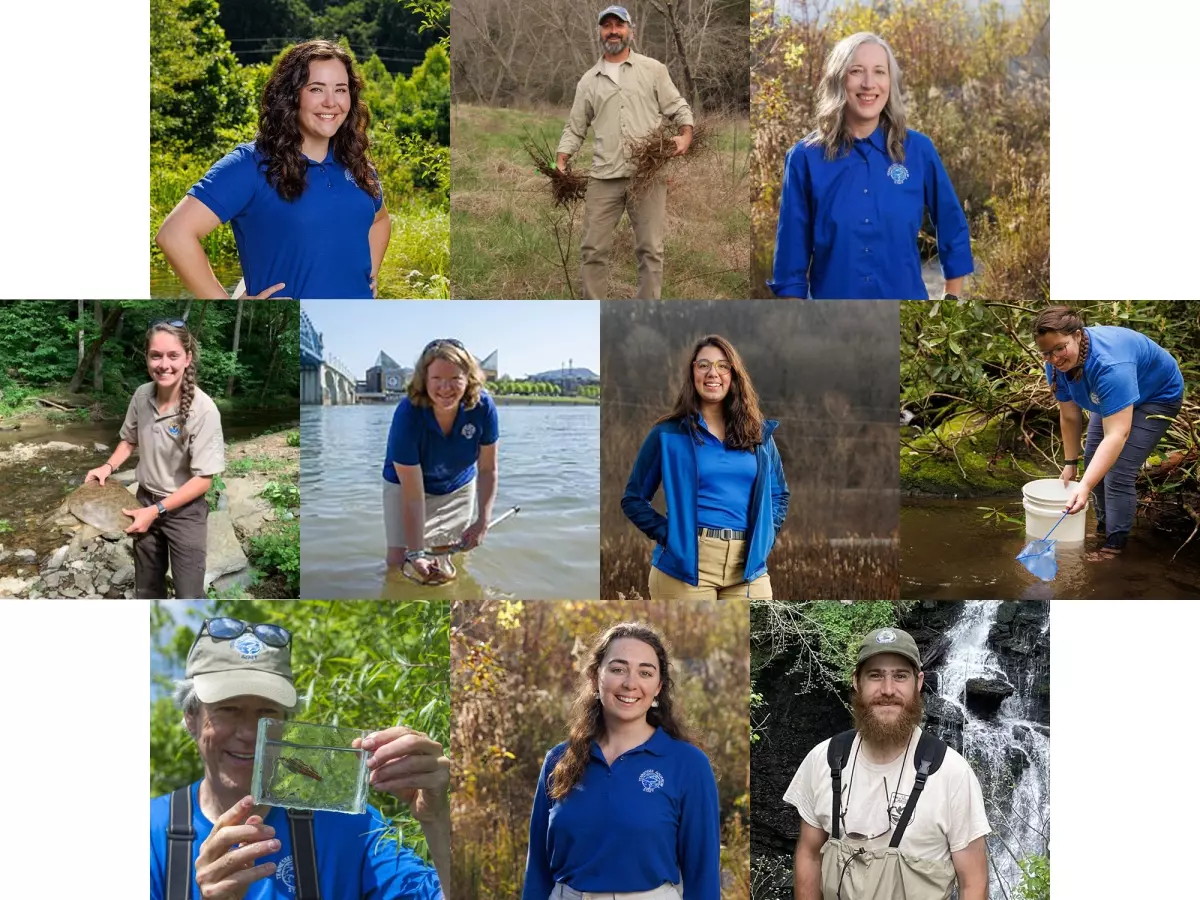 From left to right, top to bottom: Sarah Kate Bailey, Geoff Call, Stephanie Chance, Makenzie Foster, Anna George, Helaina Gomez, Abbey Holsopple, Bernie Kuhajda, Tigris Nevans and Warren Stiles. Image Details
Congratulations to the honorees of the US Fish & Wildlife Service award for the Southeast
“During the summer and fall of 2024, a prolonged drought emerged as a preeminent threat to the Laurel dace, a freshwater minnow native to Tennessee. During this pivotal time, the Laurel Dace Rescue Team provided for the ongoing conservation and survival of the endangered fish by developing a water level monitoring protocol and planning for individuals to be collected and brought into captivity to maintain representation from the last two wild populations. In a short period, the team collaborated to rescue, transport, and house more than 200 fish while maintaining separation of individuals from each population. The Aquarium led the ‘Race for the Laurel Dace’ fundraising campaign, which helped significantly raise public awareness of the species’ plight and secure funding to help ensure the availability of the specialized emergency care needed for the rescued individuals. The Service’s diligent work to sample, collect, transport, and care for individual laurel dace were invaluable to this effort.”
Sarah Kate Bailey - Tennessee Aquarium
Geoff Call - U.S. Fish and Wildlife Service
Stephanie Chance - Tennessee Aquarium
Makenzie Foster - U.S. Fish and Wildlife Service
Anna George - Tennessee Aquarium
Helaina Gomez - Tennessee Aquarium
Abbey Holsopple - Tennessee Aquarium
Bernie Kuhajda - Tennessee Aquarium
Tigris Nevans - Tennessee Aquarium
Warren Stiles - U.S. Fish and Wildlife Service
Recovery Champions are U.S. Fish and Wildlife Service staff and their partners whose work is advancing the recovery of endangered and threatened species of plants and animals.
Hellbender Press previously reported on emergency efforts to rescue the fish from drought conditions on Walden Ridge.
Nokian Tyres makes rubber hit the road for conservation of endangered fish in Southeast Tennessee
Written by Wes BolingA laurel dace (Chrosomus saylori) collected by Tennessee Aquarium Conservation Institute scientists at Bumbee Creek in Rhea County, Tenn. Tennessee Aquarium
Spring City set to celebrate a rare denizen of Walden Ridge almost decimated by drought
Wes Boling is marketing communications manager for Nokian Tyres Dayton Factory.
SPRING CITY — Nokian Tyres will serve as presenting sponsor of Laurel Dace Day, a community celebration of an endangered fish, set for Saturday, May 17, in Spring City.
The inaugural event led by the Tennessee Aquarium raises awareness of the laurel dace, a critically endangered fish found only in the Walden Ridge area 20 miles from Nokian Tyres’ North American factory in Dayton.
Laurel Dace Day features a 5K race and half-mile family fun run, followed by a festival at the Spring City Nature Park with live music, a farmers’ market, local vendors and conservation education. The event is free to attend, other than registration fees for participation in the races.
Community members can learn more about the event and register for races at TNAqua.org
- laurel dace day spring city
- nokia tires environment
- rare fish of east tennessee
- cumberland plateau drought
- cumberland plateau fish
- tennessee aquarium
- wes boling
- dayton, tn
- walden ridge
- tennessee aquarium conservation institute
- melanie king aquarium
- nokian tyres’ north american factory
- spring city nature park
- leed
- leadership in energy and environmental design
- iso 14001 certification
Bees, fish and plants show how climate change is disrupting nature in 2 key ways
Written by Courtney McGinnis A bee pollinates an almond tree in an orchard. Concerns are growing that there is an increasing disconnect between pollinating plants and their pollinators due to climate change. David Kosling/U.S. Department of Agriculture
The problem with climate change isn’t just the temperature. It’s how fast the climate is changing.
This story was originally published by The Conversation. Courtney McGinnis is a professor of biology, medical sciences and environmental sciences at Quinnipiac University.
Historically, Earth’s climate changes have generally happened over thousands to millions of years. Today, global temperatures are increasing by about 0.36 degrees Fahrenheit (0.2 degrees Celsius) per decade.
Imagine a car speeding up. Over time, human activities such as burning fossil fuels, have increased the amount of greenhouse gases in the atmosphere. These gases trap heat from the Sun. This is like pressing the gas pedal. The faster the driver adds gas, the faster the car goes.
The 21st century has seen a dramatic acceleration in the rate of climate change, with global temperatures rising more than three times faster than in the previous century.
The faster pace and higher temperatures are changing habitat ranges for plants and animals. In some regions, the pace of change is also throwing off the delicate timing of pollination, putting plants and pollinators such as bees at risk.
Some species are already migrating
Most plant and animal species can tolerate or at least recover from short-term changes in climate, such as a heat wave. When the changes last longer, however, organisms may need to migrate into new areas to adapt for survival.
- climate change
- global warming
- climate change effects
- courtney mcginnis
- quinnipiac university
- climate change migration
- bees climate change
- fish climate change
- species diversity
- species extinction
- the conversation
- greenhouse gases
- plants and pollinators
- plants and climate change
- diapause
- phenological mismatch
- early blooming climate change
Editorial: Stop unnecessary and damaging despoliation of the Little Tennessee River
Written by MountainTrue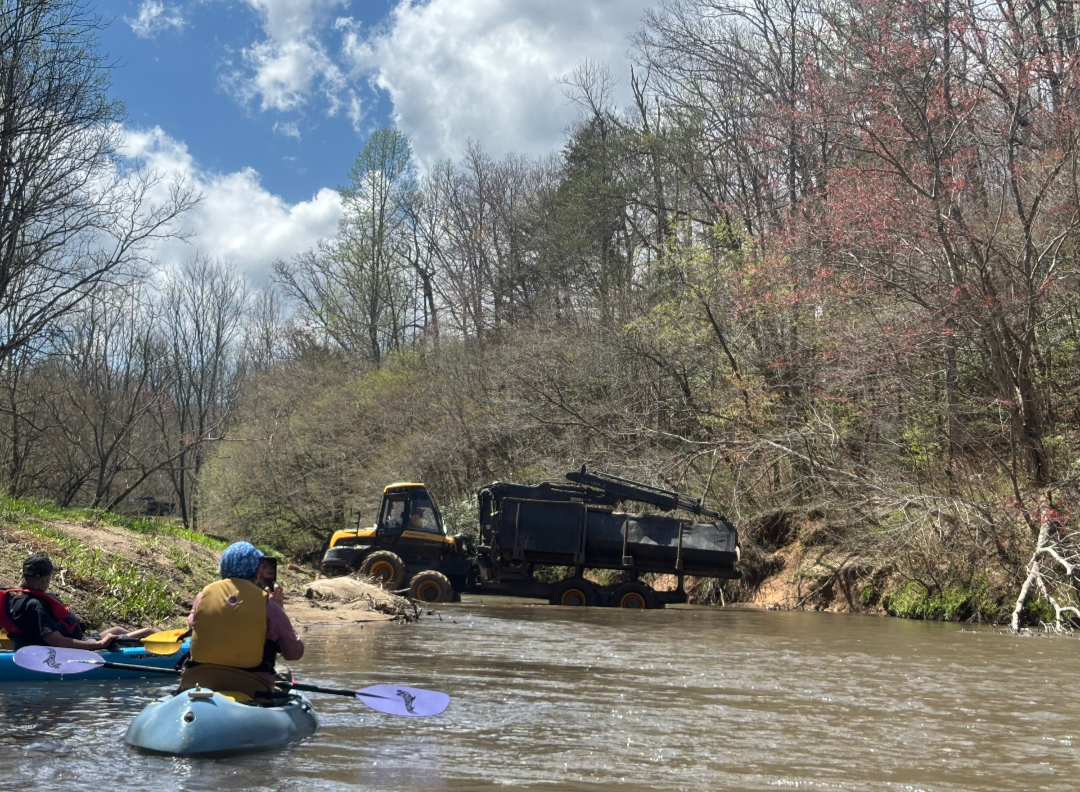 Paddlers observe contractors hired to clean up Hurricane Helene debris in a stretch of the Little Tennessee River that was largely spared the ravages of the storm. Angela Martin/MountainTrue
Tell Army Corps, county officials to stop deforestation and river disturbance on the Little T
This editorial was provided by MountainTrue.
FRANKLIN, N.C. — The Little Tennessee River is home to 100 fish species alone — some found nowhere else in the world. The river and its adjacent greenway are also a beloved recreational resource for Macon County residents and tourists alike. But over the past few weeks, the banks of the river have been under assault by U.S. Army Corps of Engineers contractors, removing hundreds of trees, many of which were still alive. Take action now to prevent further damage to the river!
While large-scale debris removal continues to be a high priority in many parts of Western North Carolina in the aftermath of Hurricane Helene, the Little Tennessee River did not experience those same impacts; it saw only normal flooding. Apart from a few localized areas, like the Cullasaja River across from Walmart, there is no need for disaster recovery-type debris removal in Macon County waterways. And yet, contractors started near Tryphosa Road in Otto and have been working their way down the river, removing trees and debris from the river channel and banks in areas where no flooding impacts occurred.
TN General Assembly slashes state wetlands protections
Written by Cassandra Stephenson Water collects among trees at the West Tennessee Wetlands Mitigation Bank — a wetland restored from its days as farmland — near the Loosahatchie River in Shelby County, Tenn. Karen Pulfer Focht for Tennessee Lookout
Bill’s supporters call it a win for private property; opponents say it’s a loss for all Tennesseans
This story was originally published by Tennessee Lookout.
NASHVILLE — A bill slashing regulations for an estimated 80 percent of Tennessee’s non-federally protected wetlands headed to Gov. Bill Lee’s desk this week after receiving approval from the General Assembly.
The bill’s West Tennessee Republican sponsors — Rep. Kevin Vaughan and Sen. Brent Taylor — said the legislation removes onerous and seemingly subjective mitigation requirements for landowners and developers.
Environmental advocates and scientists said the legislation paves the way for the destruction of Tennessee’s natural resources.
The bill passed 71-21 with one abstention in the House, and 25-6 in the Senate.
Since the 1970s, wetland regulations in Tennessee have required developers and landowners to seek permission from the state before draining or altering wetlands. The swampy areas can host diverse species, soak up rain water and filter it as it seeps into groundwater tables, recharging aquifers. Alterations to wetlands required developers to pay for mitigation — efforts to preserve or restore other wetlands nearby.
- tennessee wetlands bill
- state wetland protections
- tn development lobby
- loosahatchie river
- shelby county wetlands
- cassandra stephenson
- wetland mitigation bank
- wetland protection rollback in tennessee
- wetland regulation
- wetland conservation
- wetland restoration
- wetland alteration
- isolated wetland
- southern environmental law center
- wetland mitigation
- blue oval city
- tennessee department of environment and conservation
- wetland benefit
- tennessee wildlife federation
- supreme court isolated wetland ruling
More...
Happy Earth Day to you! Happy Earth Day to YOU.
Written by EarthSolidarity!™
What can YOU, and those around you, do to make your lifestyle more sustainable?
Today is a good opportunity to make a resolution or a promise to yourself and those around you to adopt a new habit or practice that will reduce your environmental impacts. Perhaps, you have already taken such a step a while ago and you may now scale it up or add something else to it?
EarthSolidarity!™ is focusing on individual and small-group initiatives that facilitate practical, local, down-to-Earth actions that can readily be replicated by many and thus add up to significant improvements in the community, the bioregion and — through equivalent locally and regionally tuned initiatives — contribute to our national and even global environmental health.
You may have found that it’s not so difficult, and perhaps you discovered some ways of making it easier or more successful than you thought possible at first. If so, please This email address is being protected from spambots. You need JavaScript enabled to view it..
Encourage those next to you to adopt the same or similar action. We are looking for leaders like you that are willing to help organize or just advise small environmental action groups at the neighborhood level or within local businesses and organizations.
University of Tennessee leads the way in this year’s local Earth Day observances
KNOXVILLE — It’s once again time to celebrate Earth Day — Earth Week, really — and as it has in past years, Hellbender Press has a few suggestions for some fun ways for families to celebrate the planet we call home on April 22 and beyond.
The theme of this year’s Earth Day, which is its 55th observance, is Our Power, Our Planet.
If you have items you’d like to add to the list, please email This email address is being protected from spambots. You need JavaScript enabled to view it..
This list will be updated.
STEAM Earth Day event
— 6-7 p.m., Tuesday, April 22, Carter Branch Library, 9036 Asheville Highway, Knoxville. Register here.
The University of Tennessee Office of Sustainability Earth Week
— The sustainability office has an entire month devoted to Earth Day.
— 3 p.m.-5 p.m., Tuesday April 22, UT Gardens, 2514 Jacob Drive: Join a cleanup of Third Creek.
— 11 a.m.-2 p.m. April 22, 21st Mortgage Plaza, UT Earth Day Festival will feature fun games, food and drinks.
Babies and Blooms Earth Day Festival
— 10 a.m.-1 p.m. Saturday, April 26, INCubator, 100 Cherokee Blvd., Chattanooga
Updated 4/18: Smoky gray: Former Smokies leader warns of more funding cuts; popular campsites remain closed; still little information on cuts at Great Smoky Mountains National Park
Written by Elan Young, Ben Pounds and Thomas Fraser Campers are seen enjoying a morning at Elkmont Campground in Great Smoky Mountains National Park. Elkmont is one of the Smokies campgrounds still open. National Park Service
National parks advocate and former Smokies official warns of funding shortfalls as closures continue, concerns persist, and people resist
KNOXVILLE — Funding for national parks has never amounted to much, and the federal government will cut even more if people don’t speak out in defense of the country’s natural and ecological crown jewels.
That was the message from Phil Francis, chairman of the Coalition to Protect American National Parks and former acting superintendent of Great Smoky Mountains National Park. He spoke to an audience at Knoxville’s Schulz Bräu Brewing Company hosted by Discover Life in America. Francis said that due to rising concerns his organization grew from 500 members to over 4,000 during the Trump administration. The coalition, he said, includes many people like himself who used to work for the park system, including the former superintendent of Acadia National Park.
Francis advocated that others should lobby government officials to continue to support the parks.
“If you don’t speak up, it makes it a lot more difficult,” he told the audience.
- elan young
- smokies job cuts
- federal job cuts
- rangers
- smokies rangers fired
- how many lost jobs at smokies
- smokies parking fees
- great smoky mountains economic impact
- national parks conservation association
- association of national park rangers
- hellbender press reporting on job cuts
- probationary workers fired
- great smoky mountains national park
- big south fork national river and recreation area
- maintenance backlog
- jeff hunter
- bill wade
- cades cove loop road
- carfree experience in cades cove
- carfree wednesdays in cades cove
- garry shores
- townsend
- townsend protest
- gatlinburg protest
- phil francis
- discover life in america
- ben pounds
- national park funding
- trump national park cuts
Wetlands protections built an industry. Rollbacks could erode it.
Written by Cassandra Stephenson and Delany Dryfoos Paul Stoddard, a principal at environmental consulting firm EnSafe, unlocks the gate to the West Tennessee Wetlands Mitigation Bank in Shelby County. EnSafe planted more than 50,000 trees to restore portions of this 250-acre wetland, creating credits for developers to purchase to offset destruction of wetlands elsewhere. Karen Pulfer Focht for Tennessee Lookout
Interests of all stripes push to preserve state wetlands protections against pro-developer pressure
This story is part of the series Down the Drain from the Mississippi River Basin Ag & Water Desk, an independent reporting collaborative based at the University of Missouri in partnership with Report for America, with major funding from the Walton Family Foundation.
LEWISBURG — Fourth-generation Middle Tennessee cattle farmer Cole Liggett lined up with scientists and environmental advocates in March to urge Tennessee lawmakers not to gut the state’s historically strong protections for wetlands.
Wetlands protection has been good business for Liggett. In addition to raising cattle, he’s a manager at Headwaters Reserve, a firm that developers pay to preserve and restore wetlands and streams so they can destroy them elsewhere, called mitigation banking. If lawmakers follow through on a plan to deregulate an estimated 80 percent of the state’s isolated wetlands, that will upend the industry in Tennessee and drive up prices for developers still required to pay for mitigation, Liggett testified.
Liggett works in a growing industry that operates more than 2,500 mitigation banks nationwide, earning an estimated $3.5 billion in revenue in 2019, according to a 2023 study funded by the Ecological Restoration Business Association.
The industry is built on demand spurred by the 1972 U.S. Clean Water Act, which requires developers to offset their damage to wetlands by building or restoring wetlands nearby.
But recent federal actions to shrink the scope of that law are pushing states to choose how strictly they will regulate wetlands. The consequences of those decisions not only threaten further degradation of land, water and wildlife, but also the fortunes of an industry that has made a big business out of conservation.
Editorial: I’m from Oak Ridge. Federal cuts threaten my career as a scientist.
Written by Sarah Nelson Sarah Nelson stands with a copy of The Journal of Undergraduate Research, which ran her first scientific publication in 2003. It was researched during her time as an intern at Oak Ridge National Laboratory. Nelson is now a senior research scientist. Derek Armstrong via BlueSky
Federal science cuts, in Oak Ridge and beyond, threaten American health and innovation
Sarah Nelson, MPH, PhD, is a senior research scientist in Seattle studying the genetic causes of complex health conditions. Hellbender Press has previously reported on changes to Oak Ridge federal facilities since the start of the second Trump Administration. This op-ed was originally published by KnoxNews.
OAK RIDGE — My mother has been cleaning out the attic in her Oak Ridge house and very reasonably decided my sisters and I should become the stewards of the memorabilia from our childhoods and early adulthoods. The box she recently mailed me included my first scientific publication, from my undergraduate summer internship at the Oak Ridge National Laboratory Mammalian Genetics Section (the “Mouse House”) in 2002.
Over 20 years later, I am a senior research scientist and author on 60+ scientific publications mostly related to understanding how genetic variation contributes to different human diseases.
Even before I received that box in the mail, I had been reflecting on why I chose a career in scientific research — mainly because, since January, I am no longer sure if and how I will be able to continue pursuing it. Federally funded scientific research is being attacked and dismantled by the administration of President Donald Trump, threatening the entire scientific enterprise. The situation is dire, and I urge you to join me in staying informed and speaking out against these existential threats to science.